Skin rejuvenation
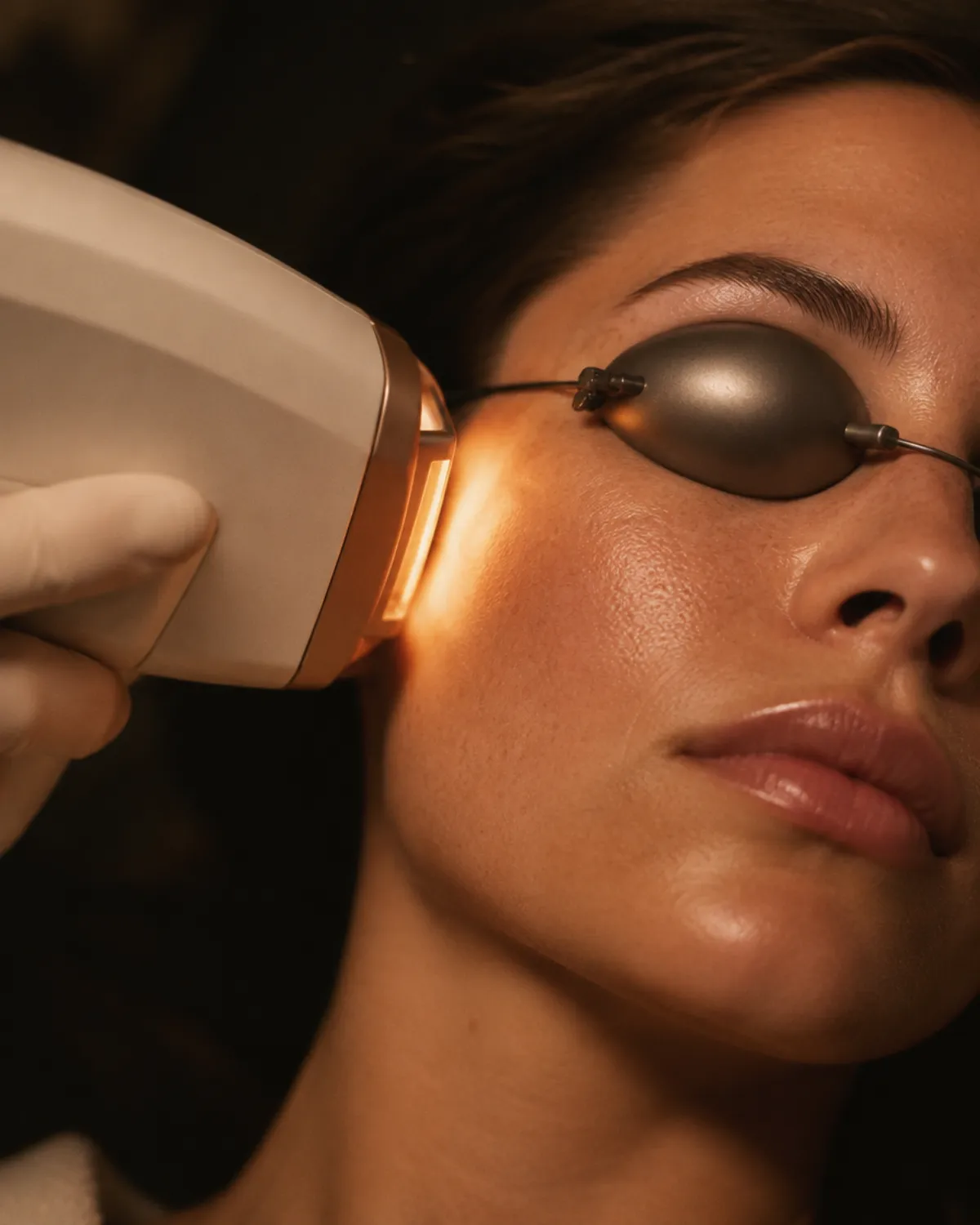
A non-invasive treatment that uses targeted pulses of light to treat sun damage, pigmentation, rosacea, acne and broken capillaries, while boosting collagen.
- Course
- A course of 3 sessions
- Spacing
- Every 2 to 4 weeks
- Each session
- 15 minutes to over an hour
- Downtime
- Redness for a few hours
What it treats
- Sun spots, age spots and pigmentation
- Freckles
- Rosacea, flushing and general redness
- Spider veins and broken capillaries
- Cherry angiomas
- Acne, and the redness of acne scars
- Fine lines and uneven texture
How it works
Broad-spectrum light reaches the deeper layer of your skin, the dermis. It turns to heat when it meets its target, excess melanin in brown spots or haemoglobin in red vessels, and breaks it down while the surrounding skin is left unharmed. The same warmth sets off new collagen.
For acne, a course kills the bacteria behind breakouts and shrinks overactive oil glands. It will not remove acne scars, but it blends their redness into the skin around them.
For rosacea, the light heats the dilated vessels just under the surface so they collapse and fade, calming redness and flushing. It manages rosacea rather than curing it, so top-ups are part of the plan.
How long a course takes
| Concern | Sessions | Spacing | Course |
|---|---|---|---|
| Acne | 3 | Every 2 weeks | 6 weeks |
| Rosacea | 3 | Every 4 weeks | 3 months |
| Skin rejuvenation | 3 | Every 3 weeks | 2 months |
A course of 3 is our starting point. A single spot of pigment or a small vessel can clear in one session; we reassess once your skin has healed, after 2 to 4 weeks. Hormones play a part too. Everyone gets a personal plan, with top-ups every 6 to 12 months.
Conditions in detail
Hyperpigmentation (dark spots)
Dark patches form when the skin overproduces melanin, often after sun, inflammation or acne. IPL heats and breaks up the excess pigment without harming the skin around it. It darkens, then naturally flakes off, leaving a more even tone.
Light spots
IPL cannot bring colour back to skin that has lost its pigment, such as vitiligo or deep scarring. If light spots only look pale because of the sun damage around them, fading that darker skin evens everything out.
Freckles
Whether you were born with them or they came from the sun, freckles respond well. They darken for a short time, then shed with your skin's normal turnover to reveal a clearer layer beneath.
Rosacea and redness
The light is absorbed by the red blood cells in tiny, dilated vessels. The heat closes them off, reducing persistent flushing and blotchiness and calming reactive skin.
Spider veins
Small twisting vessels around the nose and cheeks are sealed by the heat of the light. Over the following weeks your body reabsorbs them and they fade from view.
Fine lines and texture
Gentle heat in the dermis triggers your skin's healing response and new collagen and elastin. Skin turnover speeds up too, so the surface looks smoother, tighter and brighter.
Before your visit
- Come with clean skin: no creams, and no make-up if we are treating your face.
- Avoid anything that irritates the skin, including waxing, for 1 to 2 weeks before.
- No sun beds, sunbathing or fake tan for 6 weeks before and throughout your course. Any tan must have fully faded.
- Tell us if you have a tan, sunburn or a skin reaction, and about any medication you take.
Afterwards, follow your aftercare guide.
Questions
Does it hurt?
Most clients find it very tolerable, like a quick, mild pinch or the snap of a warm rubber band. No numbing cream is needed.
Is there downtime?
Not really. The skin is red and a little swollen for a few hours, like mild sunburn, and most people carry on with their day. A cool compress helps.
What are the side effects?
Redness, swelling and some discomfort are common and settle within 1 to 3 days. Blistering, cold sore flare-ups, infection, scarring or changes in skin colour are rare, and following the before and after advice keeps that risk low.
When will I see results?
Visible changes start roughly 2 weeks after a session. Pigment darkens first, like faint coffee grounds, then flakes away.
Are the results permanent?
Treated sun spots, freckles and vessels are gone for good. New ones can still appear with age and sun, so wear SPF every day and plan a maintenance session once or twice a year.
Can you treat melasma?
No. Melasma reacts to heat, and IPL can make it darker. We will check for it at your consultation.
Can I wax after treatment?
Not during your course, as it irritates the skin. You can wax again about 4 weeks after your final session.
Start with a consultation.
£10 for a consultation and patch test, credited against your treatment.
We check your skin and answer every question first.